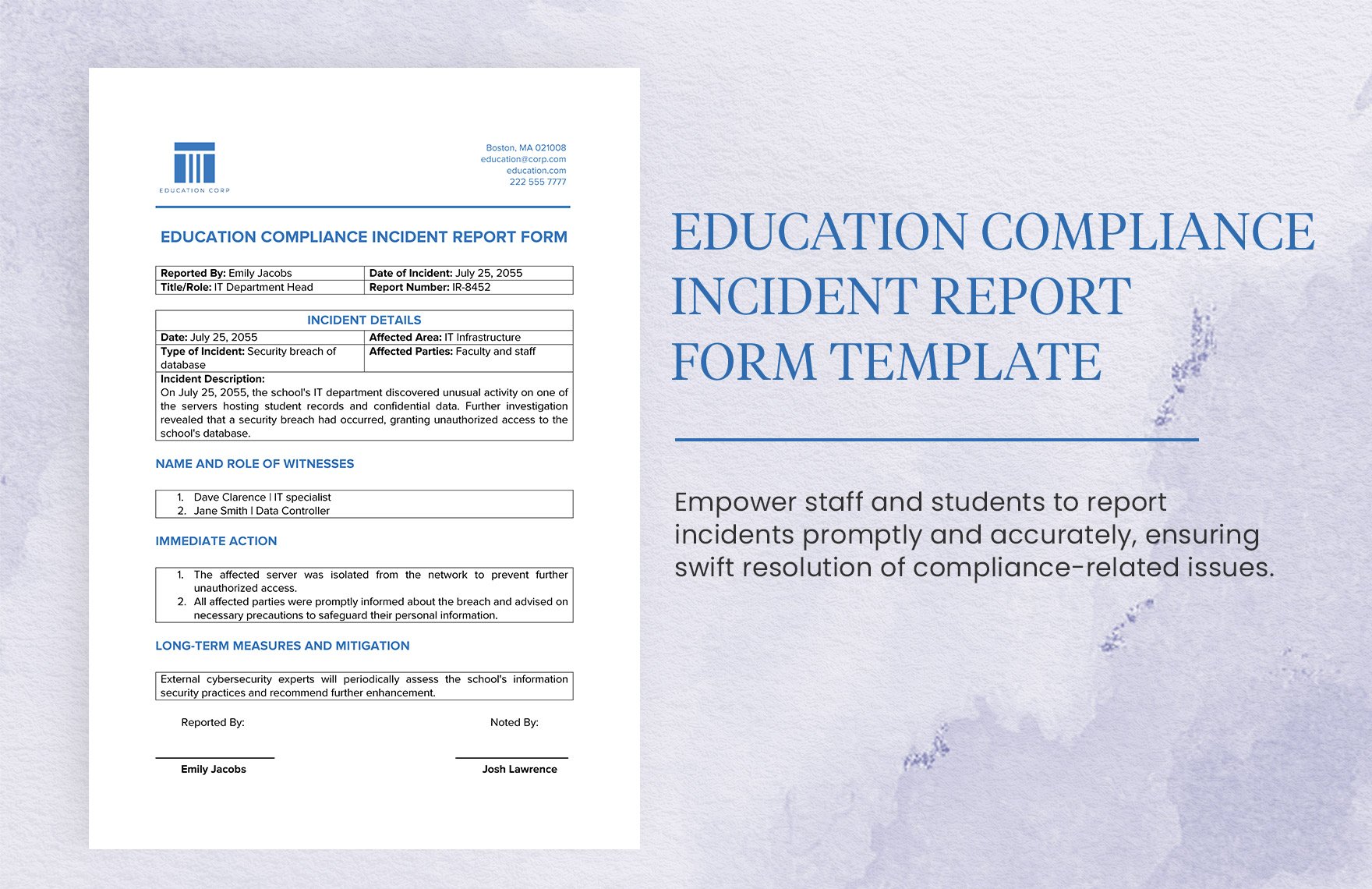
The escalating need for effective communication and accountability within educational institutions is a constant challenge. Schools are increasingly reliant on robust systems for documenting and analyzing incidents – from minor disruptions to serious safety concerns. This is where a well-structured School Incident Report Template becomes invaluable. A comprehensive and easily adaptable template ensures that all relevant information is captured, analyzed, and utilized to improve school safety, student well-being, and overall operational efficiency. This article will delve into the essential components of a robust School Incident Report Template, providing practical guidance for administrators, teachers, and support staff. Understanding how to utilize this template effectively is crucial for fostering a culture of proactive safety and responsiveness. The core purpose of this document is to equip you with the knowledge and tools necessary to create and manage effective Incident Reports. Let's explore how to build a system that prioritizes clear, concise, and actionable information.
Understanding the Importance of School Incident Reports
The benefits of implementing a standardized School Incident Report Template extend far beyond simply recording events. It's a strategic tool that facilitates investigations, identifies root causes, and ultimately contributes to preventative measures. A properly executed template allows for a systematic approach to analyzing incidents, ensuring that lessons are learned and implemented to prevent recurrence. Without a clear and documented process, it's difficult to determine the true impact of an incident, hindering efforts to improve school policies and procedures. Furthermore, readily available reports provide valuable data for analyzing trends, identifying areas of concern, and allocating resources effectively. A well-maintained School Incident Report Template is a cornerstone of a proactive and responsive school environment. It moves beyond simply reacting to incidents and actively promotes a culture of continuous improvement.

Key Components of a School Incident Report Template
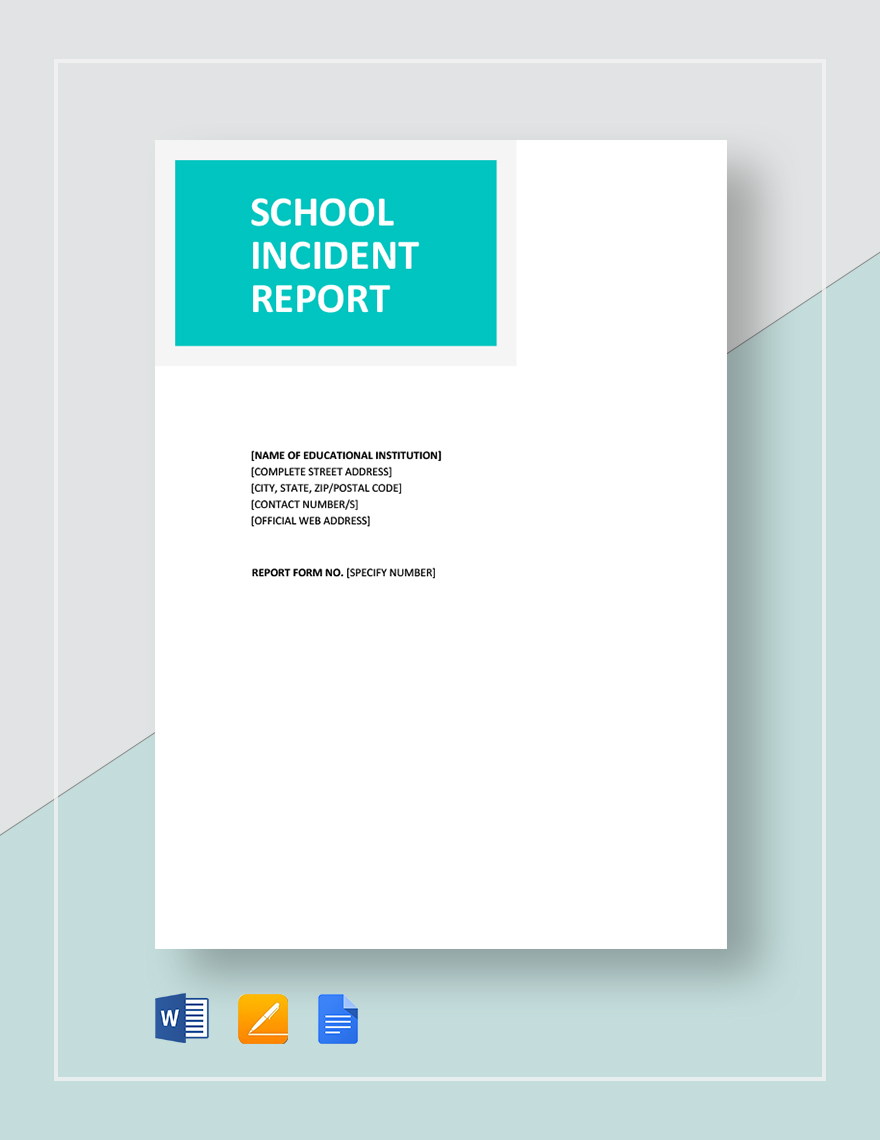
A comprehensive School Incident Report Template typically includes several key sections. Each section is designed to gather specific information relevant to the incident and its impact. Here's a breakdown of the essential elements:
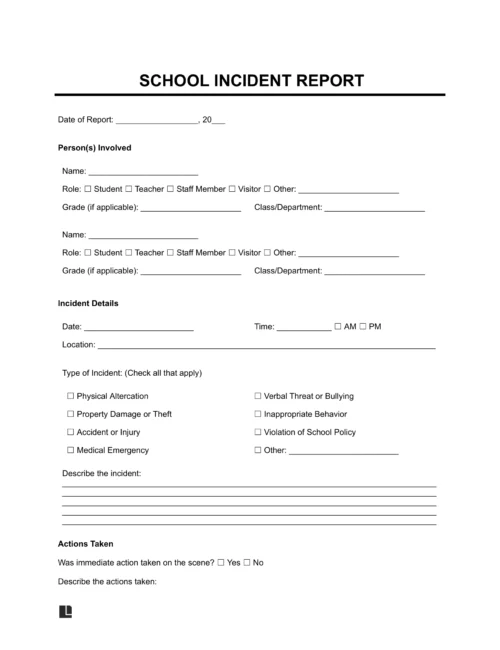
Section 1: Incident Details – The Core of the Report
This section provides a chronological account of the incident itself. It's vital to be as detailed as possible, capturing the following:
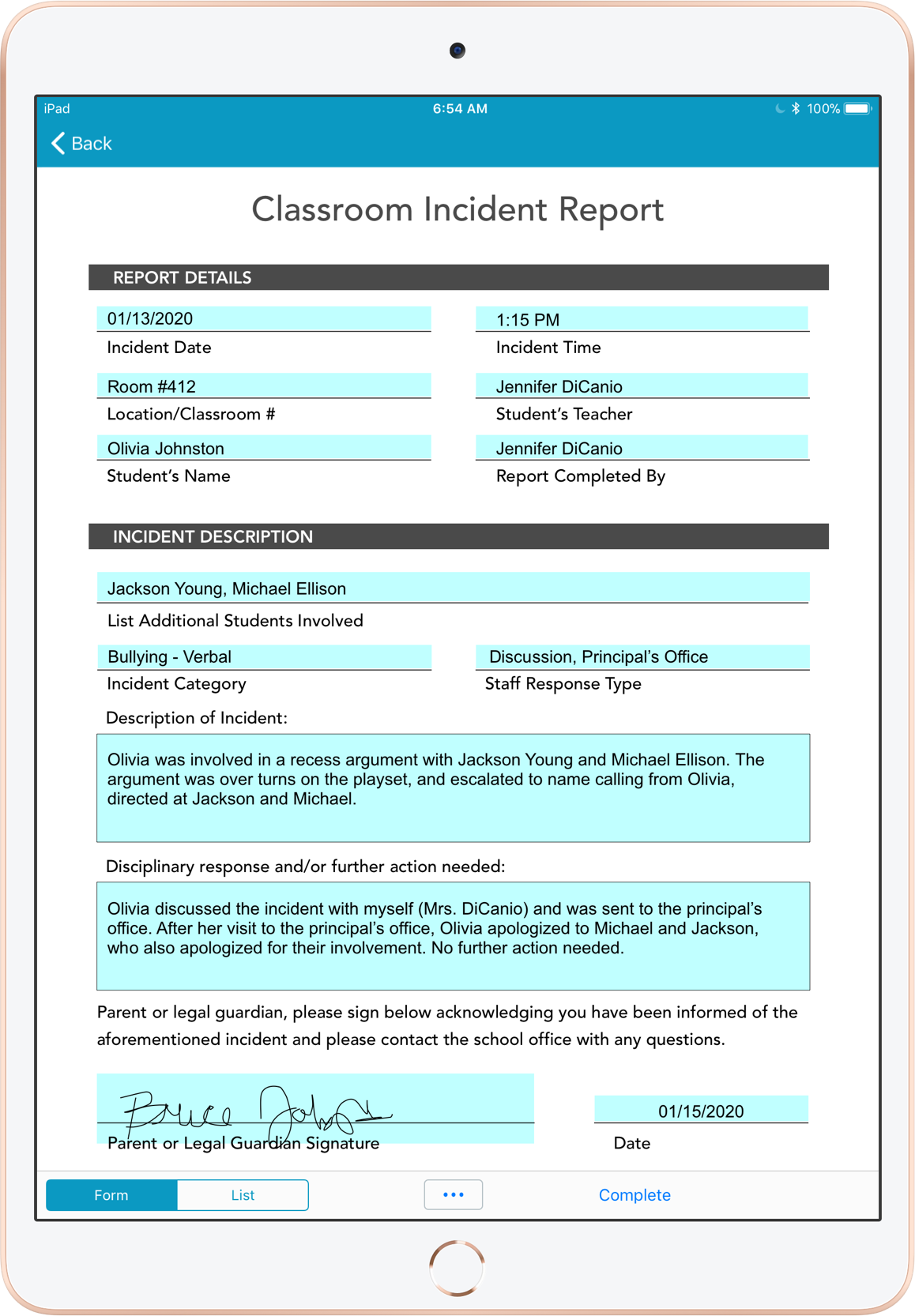
- Date and Time: Precisely record the date and time the incident occurred.
- Location: Specify the exact location where the incident took place.
- Description of the Incident: A clear and concise narrative of what happened. Avoid generalizations; focus on observable events. For example, instead of saying "There was a fight," state "Two students, John and Sarah, were observed arguing in the hallway near the library."
- Witness Statements: Collect statements from all involved parties – students, staff, parents, and any other relevant individuals. Include contact information for each witness.
- Injuries: Document any injuries sustained by individuals involved, including the nature of the injury, severity, and treatment received.
Section 2: Immediate Actions Taken
This section outlines the steps taken by school personnel immediately following the incident. It demonstrates responsiveness and a commitment to addressing the situation.
- Initial Response: Describe the actions taken by staff members – who was notified, what steps were taken to secure the area, and what initial interventions were performed.
- Security Measures: Detail any security measures implemented – such as lockdown procedures, perimeter control, or the involvement of law enforcement.
- Communication: Document communication efforts – how information was disseminated to students, staff, parents, and relevant authorities.
Section 3: Investigation & Analysis
This section is the most detailed and requires careful consideration. It's where you gather information to understand the root cause of the incident.

- Cause Analysis: Identify potential contributing factors – was it a misunderstanding, a conflict, a lack of supervision, or something else?
- Contributing Factors: List any contributing factors that may have exacerbated the situation.
- Root Cause Analysis: Attempt to determine the underlying cause of the incident. This often requires a thorough investigation.
- Evidence Collected: Document any physical evidence collected during the investigation – photographs, videos, or other relevant materials.
Section 4: Recommendations & Follow-Up
This section focuses on proactive steps to prevent future incidents.

- Recommendations: Provide specific, actionable recommendations for improvement – addressing the root cause identified in the investigation.
- Training Needs: Identify any training needs for staff or students related to safety protocols or conflict resolution.
- Policy Review: Suggest potential revisions to school policies or procedures based on the incident.
- Follow-Up Actions: Outline the planned follow-up actions – scheduled meetings, review sessions, or additional investigations.
Utilizing the Template Effectively – Examples
Let's illustrate how to effectively utilize each section of the template. Consider a scenario where a student was verbally harassed by another student in the cafeteria.

- Section 1 (Incident Details): "On October 26, 2023, at approximately 10:30 AM, a verbal altercation occurred between John Smith (Grade 8) and David Lee (Grade 9) in the cafeteria. Mr. Jones, the cafeteria staff member, intervened and separated the students. John stated that David made a hurtful comment about his appearance. David stated that John was being aggressive."
- Section 2 (Immediate Actions): "Mr. Jones immediately notified the school administration and secured the cafeteria. A staff member, Ms. Brown, was dispatched to the area to assess the situation."
- Section 3 (Investigation & Analysis): "The investigation revealed that David had been experiencing feelings of insecurity and had been struggling with social anxiety. John's behavior was a result of a misunderstanding and a lack of effective communication. A training session on conflict resolution was scheduled for next week."
- Section 4 (Recommendations): "To prevent similar incidents, we recommend implementing a peer mediation program and providing students with resources on emotional regulation and assertive communication. We will also review our cafeteria safety protocols to ensure adequate supervision."
Conclusion
A well-designed and consistently utilized School Incident Report Template is an indispensable tool for promoting a safe and supportive learning environment. By systematically documenting incidents, analyzing their root causes, and implementing effective preventative measures, schools can significantly reduce the risk of future occurrences and foster a culture of proactive safety. Investing in a robust template is an investment in the well-being of students, staff, and the entire school community. Remember that the template is a starting point – continuous refinement and adaptation based on school-specific needs and lessons learned are crucial for maximizing its effectiveness. Regular review and updates are essential to ensure the template remains relevant and aligned with evolving best practices in school safety and security. Ultimately, a proactive approach, supported by a clear and documented Incident Report Template, is the key to creating a positive and secure school experience for all.

0 Response to "School Incident Report Template"
Posting Komentar